
The Spokane mortgage guides
Construction Loans
Updated: August 2026
Construction Loans in Spokane, WA.Build on Your Own Land
Building in Deer Park, the West Plains, or across the line in Rathdrum takes different financing than buying — and picking the wrong structure costs real money.
Start here
Real numbers in about a minute — no credit pull, no spam.
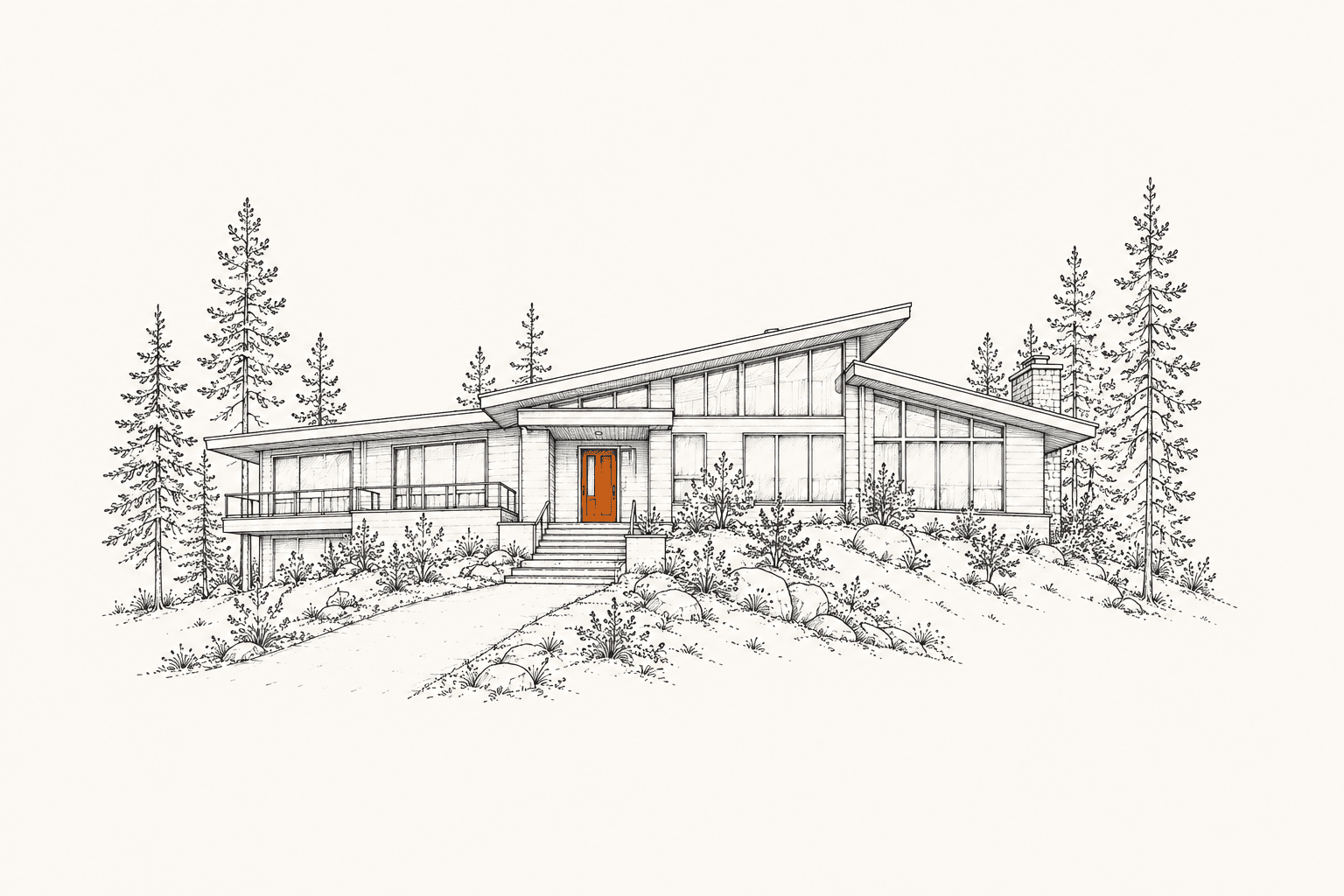
Construction loans in Spokane release money in stages as your builder hits milestones, charge interest only during the build, and convert or refinance into a normal 30-year mortgage when the house is done. The structure you pick before breaking ground decides most of the cost.
Two ways to finance a build
Every construction project in Spokane County ends up in one of two structures, and the choice matters more than most builders will tell you.
One-time close (construction-to-permanent). A single loan covers the build and automatically converts to your permanent mortgage at completion. One closing, one set of closing costs, and your permanent financing is locked before the first shovel of dirt moves. The trade: less flexibility to shop your permanent loan later, so the pricing at that single closing has to be right.
Two-step (construction loan, then takeout). A bank or credit union funds the build, and you close a separate permanent mortgage — the takeout — when the house is finished. Two closings cost more in fees, but you keep the freedom to shop the permanent loan at completion, which can win if the market moves your way during a 12-month build.
Which one is cheaper depends on your timeline, your builder, and where pricing sits when you start — the honest answer changes file to file. I price both routes side by side, including the version where a local bank carries the construction phase and I handle the takeout. If the two-step wins on your numbers, I'll tell you that even when it means sharing the file with a bank.
Where people are building around Spokane
The building activity I see runs in a few corridors: new subdivisions in Spokane Valley and along the North Division corridor toward Mead, custom homes on acreage in Deer Park, Chattaroy, and Elk, West Plains builds near Fairchild in Cheney, Medical Lake, and Airway Heights, and across the state line in Rathdrum and Post Falls, where lots still price below comparable Spokane County ground. I'm licensed in both Washington and Idaho, so a Kootenai County build works the same way — the Coeur d'Alene guide covers that market.
If your build sits in a USDA-eligible area — much of Deer Park, Cheney, and Medical Lake does — a USDA loan single-close construction option may put the whole project at zero down. Building bigger? Anything above the $832,750 conforming limit moves into jumbo construction territory, which carries its own down payment rules.
The VA construction loan, for those who've earned it
Veterans and active duty buyers can build with zero down through a VA construction loan — one closing, no monthly mortgage insurance, and the funding fee financed into the loan. The requirements that trip people up: the builder must register with the VA (fast and free, but some refuse), and the appraisal must support the finished value from plans. Fairchild families building near the base use this more than almost anyone, and the number of lenders who actually close VA construction is small enough that finding one is half the battle.
Land loans, and the land-equity trick
If you're buying acreage now and building later, that's a land loan: bigger down payment, shorter term, usually through a bank or credit union. One thing worth planning around before you buy the lot — when you eventually build, the equity in that land typically counts toward your construction loan down payment. Pay off a $90,000 lot in Deer Park and you may start the construction loan needing little or no additional cash down. Buyers who structure the land purchase with the future build in mind save five figures at the construction closing, and it's a conversation worth having before you buy the lot, not after.
How I run the numbers with you
Bring me your plans, your builder, and your budget — or just the lot you're circling — and I'll map the real cost of each structure: one-time close against two-step, conventional against VA, FHA, or USDA where they fit, with the land equity counted properly. Principal, interest during the draw period, conversion terms, the whole picture. If a local bank's construction program beats what I can structure, you'll hear that from me first.
Building is stressful enough without discovering mid-frame that the financing was set up wrong. Call, text, or start above before you sign the builder contract — that's the moment the financing decisions still cost nothing to change.
On the record
Frequently asked questions.
How long does it take to get a construction loan?
Longer than a purchase loan — plan on several weeks from application to closing. The loan itself isn't the slow part. The appraisal has to value a house that doesn't exist yet from plans and specs, and the lender has to vet your builder's license, insurance, and budget before anyone breaks ground. Buyers who show up with a signed builder contract, full plans, and a line-item budget close much faster than buyers still comparing floor plans.
How long can you finance a construction loan?
The build phase typically runs 12 months, sometimes 18 for a larger custom home. During that window you pay interest only on the amount drawn so far. After the home is finished, the loan either converts to a standard 30-year mortgage (construction-to-permanent) or gets paid off by a separate permanent loan you close at completion. You're not carrying a construction loan for 30 years — it's a bridge to the real mortgage.
Can I get a VA construction loan in Spokane?
Yes, and it's one of the most under-used corners of the VA benefit: zero down on the build, one closing, no monthly mortgage insurance once you're in. The catch is that fewer lenders handle VA construction and your builder must be registered with the VA — a quick step for most established Spokane-area builders, a red flag if yours refuses. With Fairchild families building in Medical Lake, Cheney, and the West Plains, this comes up more than you'd think.
What down payment does a construction loan require?
Conventional construction loans typically want 5% to 20% depending on the program and your file. VA construction can be zero down for eligible veterans, and FHA one-time close runs 3.5%. Here's the part that surprises people: if you already own the land, its equity usually counts toward your down payment. Someone who paid off a $90,000 lot in Deer Park may bring little or no additional cash to the construction closing.
Can I buy land now and build in a few years?
Yes, with a land loan — a separate product, usually through a bank or credit union, with a larger down payment (often 20% to 35%) and a shorter term than a mortgage. When you're ready to build, the construction loan pays off the land loan and folds everything into one project. If you're eyeing acreage in Elk, Chattaroy, or north Kootenai County, buying the lot first and building later is a common path — just don't let the land payment eat the savings you'll need for the build.
Do FHA or USDA construction loans exist in Washington?
Both exist. FHA offers a one-time close construction loan at 3.5% down — useful for buyers whose credit fits FHA better than conventional. Don't confuse it with the FHA 203(k), which funds renovation of an existing home, not ground-up construction. USDA has a single-close construction option too, limited to USDA-eligible areas like Deer Park, Cheney, and Medical Lake, and fewer lenders offer it. Whether either beats a conventional structure depends on your credit and the property — that's a pricing exercise, not a guess.
What is a draw schedule?
Construction loans don't hand your builder the full amount on day one. Money releases in stages — foundation, framing, mechanical, finish — and the lender sends an inspector to verify each stage is done before releasing the next draw. You pay interest only on what's been drawn. It protects you as much as the lender: a builder who's been paid for work not yet done has less reason to finish on schedule.
Still weighing it? The fastest way to a real answer