
The Spokane mortgage guides
Rapid Repay HELOC
Updated: August 2026
Rapid Repay First-Lien HELOC in Spokane, WA.Payoff Loan
Most lenders can't offer this one: your mortgage becomes a line of credit, your paycheck parks against the balance, and every dollar you don't spend is quietly shortening your loan — every single day.
Real numbers in about a minute — no credit pull, no spam.
or call (509) 230-3765
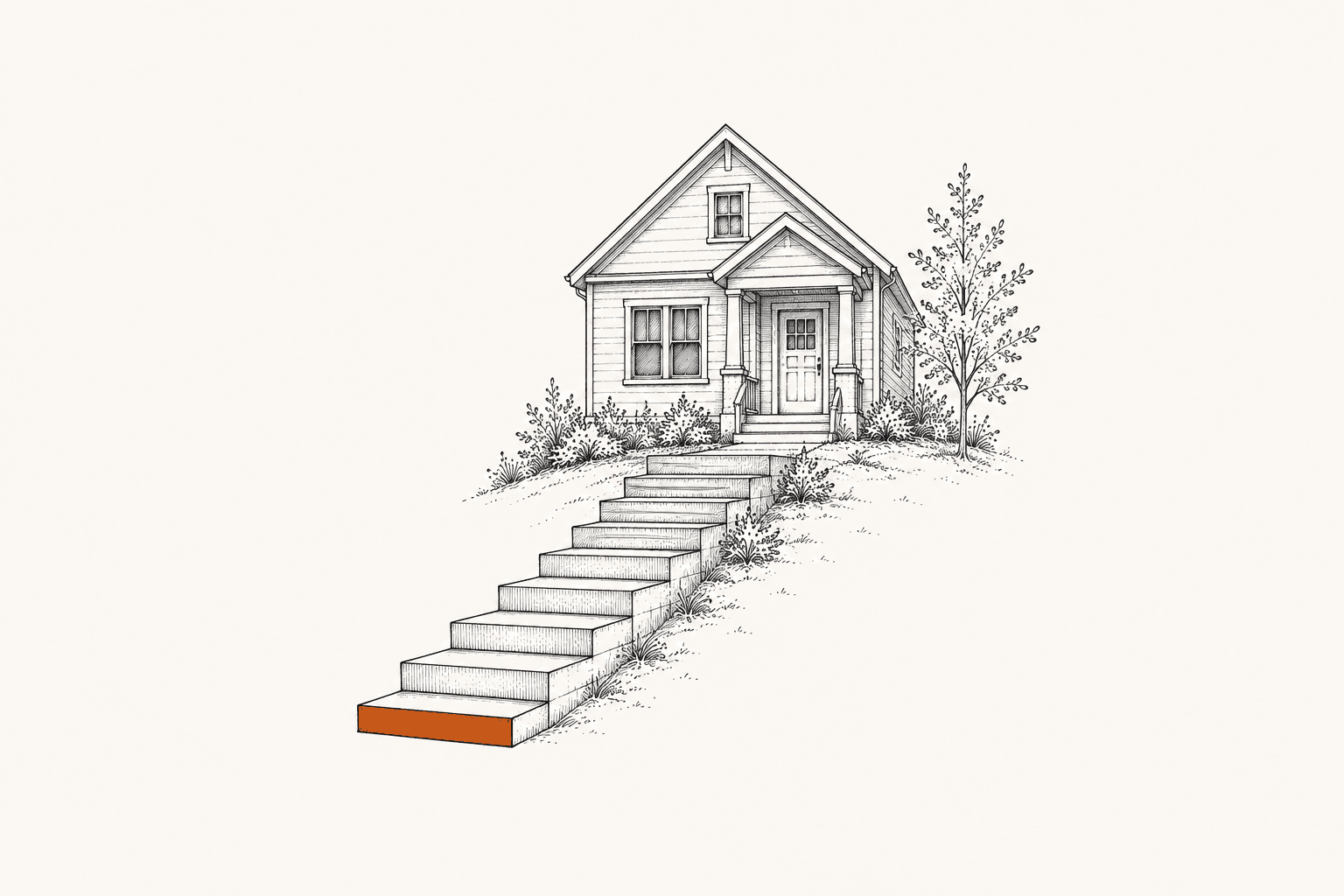
A first-lien HELOC turns a Spokane mortgage into a line of credit your whole financial life runs through: your income deposits against the balance, interest accrues daily on what you actually owe, and every dollar you don't spend is shortening your loan until the day you spend it.
Most lenders don't offer a true first-lien HELOC with a sweep account. We do — in Spokane, Spokane Valley, Liberty Lake, and across the state line in Coeur d'Alene, Post Falls, and Hayden — and for the right household it's the fastest legitimate path to a paid-off home I can put someone on.
How the strategy actually works
Four moving parts, none of them complicated:
- Your mortgage becomes a first-lien HELOC. The line pays off your existing loan (or funds your purchase) and becomes the only lien on the house.
- Your income deposits into the paired sweep account. It works like checking — direct deposit, debit card, checks, mobile app. But the balance sits against your loan.
- Interest is calculated daily on what you actually owe. Paycheck lands, balance drops, interest accrual drops that same day. A traditional mortgage never gives you credit for money sitting in your checking account. This one does.
- Whatever you don't spend stays on the balance. Your monthly surplus isn't a separate "extra principal payment" you have to remember to make — it's the default outcome of leaving money in the account.
The engine behind it is the difference between monthly interest on a full balance and daily interest on a shrinking one. Discipline does the rest.
Try the simulator
Put in your balance, income, and monthly spending, and compare the payoff timeline against your current mortgage. The tool below is Canopy's official simulator — the same one on the corporate site.
Simulator provided by Canopy Mortgage, LLC (NMLS #1359687). Results are hypothetical illustrations from your inputs — not a quote, offer, or guarantee. See the disclosures inside the tool.
Who should — and shouldn't — do this
This product rewards one specific shape of household: income reliably exceeds spending, month after month. The bigger and steadier that surplus, the harder the daily-interest math works for you. Around Spokane County that's often a dual-income household on the South Hill or in Liberty Lake with the mortgage as the only real debt; on the Kootenai County side I see it with established Post Falls and Hayden homeowners whose incomes outgrew the house payment years ago.
It punishes the opposite. The rate is variable, the required payment during the draw period is interest-only, and the whole strategy depends on leaving your surplus parked. If your budget runs tight, if your income swings seasonally, or if a fixed predictable payment is what lets you sleep — a conventional loan is the better instrument, and I'd rather tell you that in the first conversation than watch the strategy fight your cash flow for a decade.
One more distinction worth making: if what you actually want is to pull equity out for a remodel or a payoff — not accelerate the mortgage — that's a different tool entirely. The standard HELOC and home equity loan guide covers that side of the equity conversation.
The guidelines snapshot
Current guidelines, plain-English version: primary residences only, purchase or refinance (cash-out included), in Washington and Idaho where I'm licensed. Lines run $100,000 to $1.5 million. Leverage is credit-tiered: up to roughly 90% of home value at 720+ credit, around 85% at 700, and about 80% at the 680 floor, with larger lines above $1 million capped tighter. Debt-to-income runs to about 45%, and reserves of roughly 5% of the full line are required. No mortgage insurance at any leverage — there's no PMI on this product, period. Structure is 30 years: a 10-year draw period with interest-only minimums, then 20 years of repayment.
A few practical details worth knowing upfront. Eligible properties are 1-4 unit homes, warrantable condos, and PUDs — no manufactured homes, which finance through the standard programs instead. On a purchase, you bring at least 5% of your own funds; gift money is fine beyond that, and sellers can contribute up to 6% toward costs. Escrows are waived, so you pay property taxes and insurance directly instead of through a monthly escrow cushion — a feature if you like the control, a responsibility if you don't. The rate is variable, tied to a Treasury index with caps on each adjustment and over the life of the line, and you're qualified at a cushioned rate above the actual one on a full 30-year amortization — the guidelines are deliberately built so approval means headroom. And the sweep account costs nothing to keep open at a zero balance, with no fees to draw on the line.
One structural note worth understanding: the line must be the only lien on your home. Existing mortgages and any second liens or HELOCs get paid off at closing through the new line. That's what puts it in first position and makes the whole sweep mechanism work.
Guidelines change — every number above gets confirmed against the current matrix when we run your file.
What it costs to be wrong
I bring this up because nobody selling "mortgage acceleration" products ever does. The strategy has a failure mode: a household that borrows freely against the draw period, spends the surplus, and rides the variable rate ends up with a balance that isn't shrinking and a payment that can move. The product didn't fail — the fit did. That's why the first conversation is me stress-testing your cash flow, not signing you up.
On the record
Frequently asked questions.
What is the Rapid Repay first-lien HELOC?
It's a home equity line of credit that replaces your mortgage entirely — first lien position, not a second. It comes paired with a sweep deposit account that works like checking: direct deposit, debit card, paper checks, mobile banking. Your income lands in that account and sweeps against the loan balance automatically, so interest — which accrues daily on your actual balance — drops the moment your paycheck hits.
How does depositing my paycheck pay off my house faster?
Traditional mortgages charge interest monthly on your full balance. With Rapid Repay, interest is calculated daily on whatever you actually owe that day. When your income deposits, your balance falls immediately, and you stop accruing interest on that money until you spend it. Whatever's left after expenses each month stays against the balance permanently. For a household with real monthly surplus, that compounds into years off the loan.
Who is this a good fit for?
Households with strong, consistent positive cash flow and the discipline to leave the surplus alone. If you reliably bring in more than you spend each month, the structure turns that habit into an accelerated payoff. If your budget is tight or your income is irregular, a fixed-payment conventional loan is honestly the better tool, and I'll tell you that directly.
Is the rate fixed?
No — it's a variable-rate line of credit tied to a market index, with caps on how much it can move at each adjustment and over the life of the line. That's part of the tradeoff for the flexibility. Rates move, so the right way to evaluate it is a conversation with your actual numbers, not a figure on a webpage.
What are the basic qualification guidelines?
Current guidelines: primary residence only, purchase or refinance, lines from $100,000 up to $1.5 million, leverage up to roughly 90% of the home's value at the strongest credit tiers, a credit score floor around 680, debt-to-income up to about 45%, no mortgage insurance at any leverage, and reserves of about 5% of the line. It has to become the only lien on the home — existing mortgages and HELOCs get paid off through it. Guidelines change, so I confirm everything against the current matrix.
Is there a draw period and a repayment period?
Yes — 30 years total. The first 10 years are the draw period, where the required payment is interest-only and you can borrow against the line freely. The final 20 years are the repayment period with principal-and-interest payments. Most people running the strategy well are far ahead of that schedule.
Can I use it to buy a home, or only to refinance?
Both. On a purchase it functions as your financing at closing; on a refinance it pays off your existing mortgage and any second liens and becomes your single first-lien line. Either way the sweep account starts working from day one.
Does the calculator on this page give me my real numbers?
It's a simulator — a good one, built by Canopy — but the results are hypothetical illustrations based on the income, expenses, and rate assumptions you type in. It assumes your cash flow stays constant and rates hold, and real life does neither. Treat it as a way to understand the mechanics, then let me run your actual scenario.
Still weighing it? The fastest way to a real answer